Spirited Away Cocktails: Kamaji Tea & No-Face
Imagine starting your first job at ten years old, only to discover that your coworkers are spirits, your boss is a witch, and your parents have been transformed into pigs. Suddenly, working a weekend shift at the local grocery store doesn't sound so terrible.
In Spirited Away (2001), director Hayao Miyazaki takes audiences into an extraordinary world of Japanese folklore, mysterious creatures, and unforgettable characters. When young Chihiro wanders into the spirit world, she must find the courage to survive an unfamiliar environment and rescue her parents.
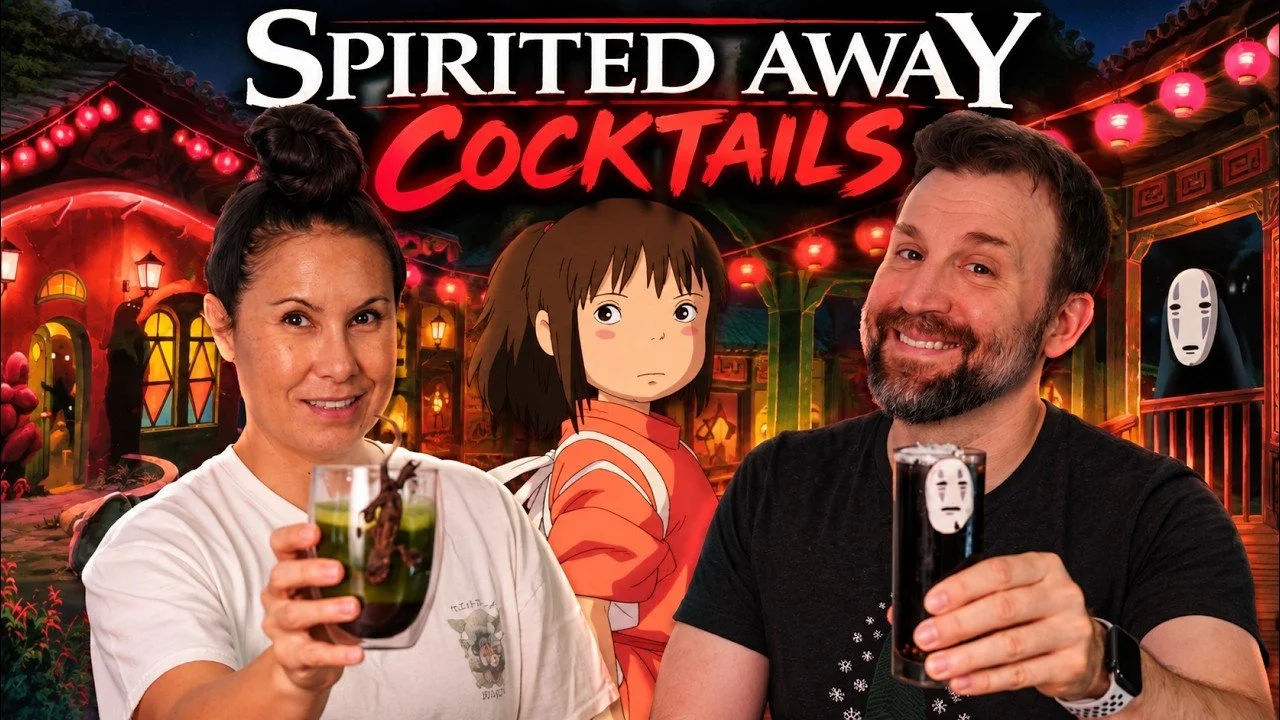
For Boozy Movies, this acclaimed Studio Ghibli film inspired two cocktails that allowed us to experiment with Japanese ingredients and explore the movie's symbolism.
Kamaji Tea is a warm Japanese whisky and matcha cocktail featuring ginger liqueur and a rich black sesame mixture. No-Face is a sake-based cocktail with cinnamon, lemon, grape, and a dramatic dark presentation inspired by the mysterious spirit.
One celebrates a character who quietly keeps the bathhouse running. The other explores a spirit whose identity seems to change depending on the world around him.
Both gave us an opportunity to step outside our usual cocktail-making comfort zone.
Kamaji Tea: A Warm Matcha and Japanese Whisky Cocktail
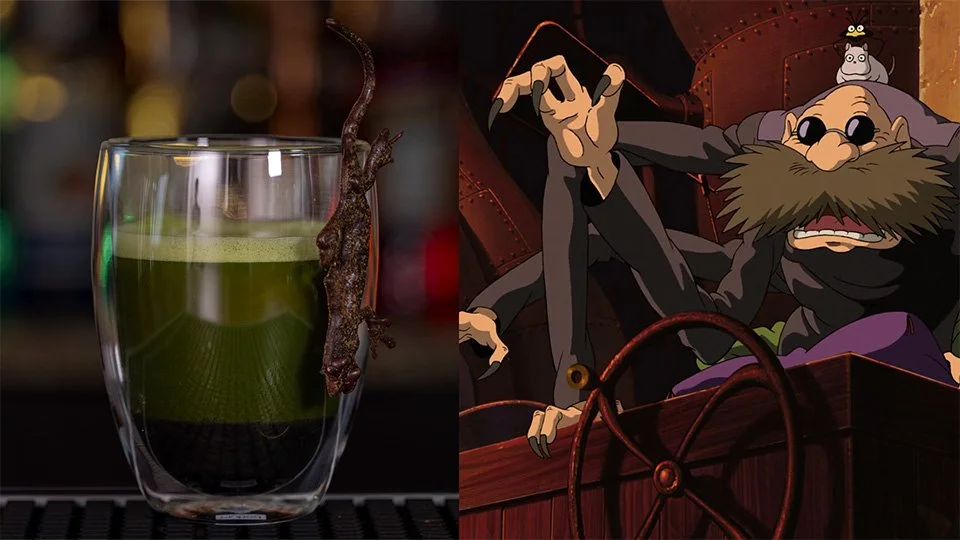
Deep beneath the bathhouse in Spirited Away, Kamaji operates the enormous boiler that provides hot water for the building.
With his many arms, endless work, and army of soot sprites, he's one of the movie's most memorable characters.
He's also considerably more important than his gruff exterior initially suggests.
Kamaji keeps the bathhouse functioning, helps Chihiro when she needs it, and demonstrates a quiet compassion that makes him one of the story's most dependable figures.
We wanted our first cocktail to reflect that combination of warmth, strength, and balance.
The result is Kamaji Tea, a warm cocktail made with Japanese whisky, ginger liqueur, freshly whisked matcha, and a homemade black sesame mixture.
Matcha provides the drink's foundation, contributing the grassy, earthy character of finely powdered green tea.
Japanese whisky adds a smooth, warming spirit component, while ginger liqueur brings sweetness and a gentle spice.
During our tasting, we're particularly impressed by how well the three flavors complement one another.
The matcha remains noticeable without overwhelming the drink, and the ginger liqueur softens some of the tea's more assertive qualities.
It's a cocktail that feels comforting without becoming excessively sweet.
And because Kamaji spends his days tending the bathhouse boiler, serving it warm seemed especially appropriate.
Why Temperature Matters in a Matcha Cocktail
One of the most interesting parts of developing Kamaji Tea was learning how to incorporate matcha into a warm alcoholic drink.
Matcha can develop an unpleasantly bitter character when prepared with excessively hot water.
For our cocktail, we use water heated to approximately 160°F, whisking the matcha until smooth and frothy before combining it with the spirits.
The lower temperature helps preserve the tea's more delicate flavors.
We also discuss the importance of avoiding excessive heat when preparing warm cocktails.
Overheating can cause alcohol to evaporate more quickly and may disrupt the balance of the finished drink.
By keeping the preparation gentle, we're able to create a smooth cocktail with a pleasant warmth and clearly defined flavors.
The Japanese whisky and ginger liqueur complement the grassy matcha rather than competing with it.
During our tasting, we describe the result as subtly sweet, smooth, and surprisingly well-balanced.
Which makes it an appropriate tribute to Kamaji, a character who helps bring balance to the chaos of the bathhouse.
Black Sesame, Soot Sprites, and a Chocolate Roasted Newt
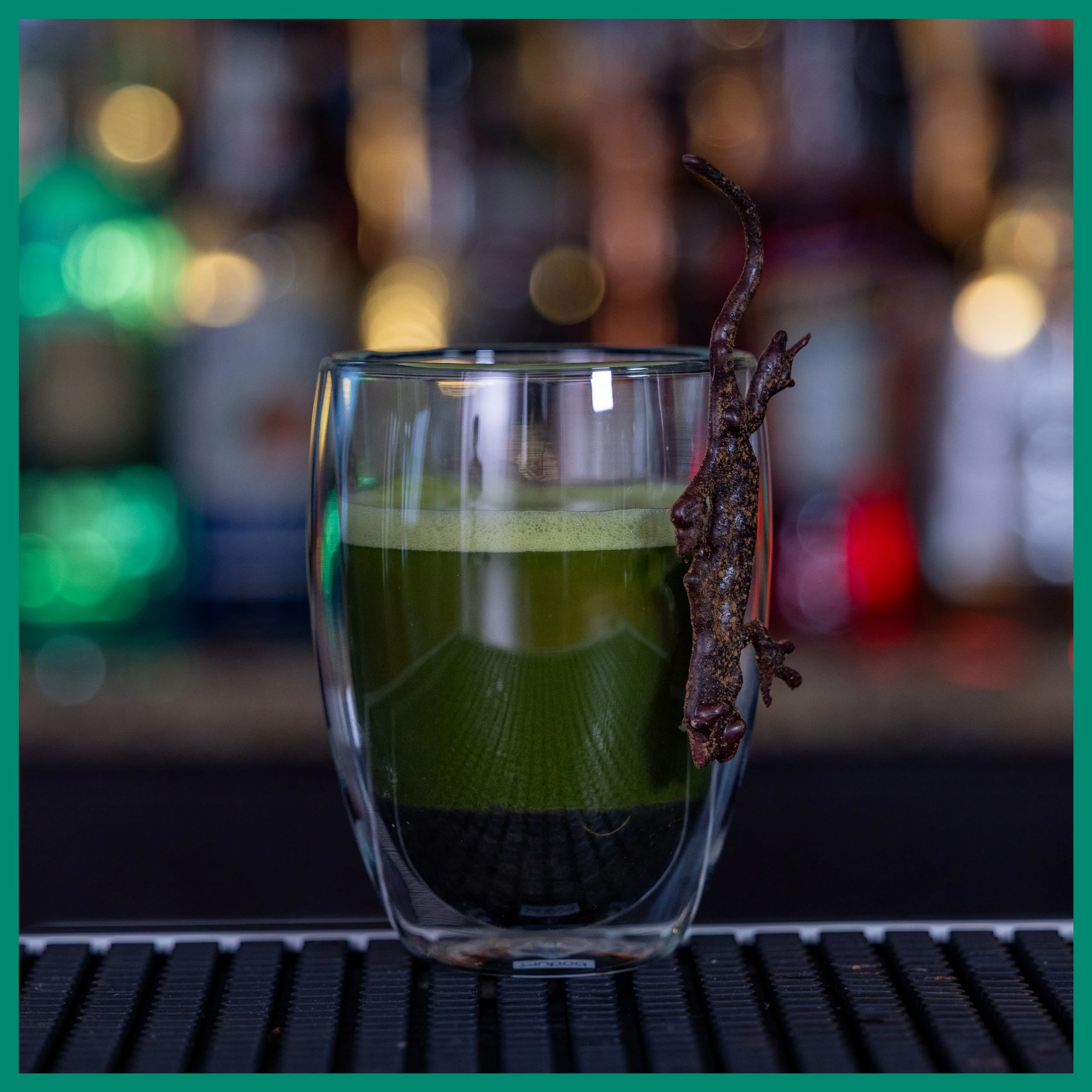
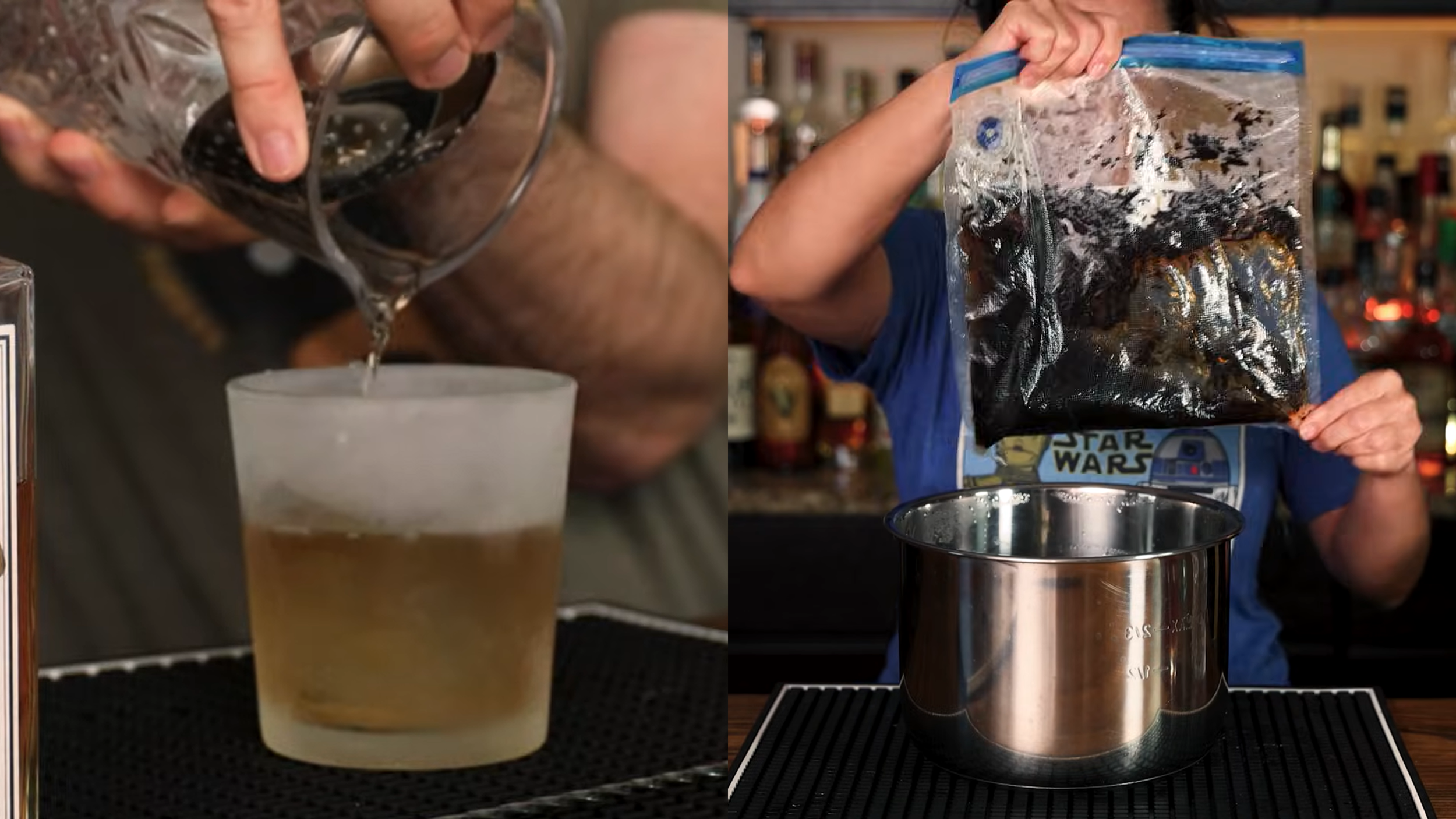
The most distinctive feature of Kamaji Tea may be the layer of homemade black sesame mixture resting at the bottom of the glass.
We developed this ingredient using a technique similar to the Aztec butter mixture featured in our homemade fall cocktail syrups episode.
Black sesame has a deep, roasted, nutty flavor that can resemble peanut butter, but with a more earthy and less sugary character.
During our tasting, we enjoy how the sesame adds richness and complexity to the warm matcha and whisky.
Because the mixture is relatively heavy, it settles toward the bottom of the glass, creating a visible layered effect.
That presentation was intentional.
The black sesame pays tribute to the little soot sprites, or susuwatari, that help Kamaji carry coal to the boiler.
These tiny creatures are among the film's most charming characters, and we wanted to give them a place in the cocktail.
We finish Kamaji Tea with a chocolate roasted newt garnish, another reference to the movie's unusual world and Kamaji's surroundings.
It's a playful detail that reinforces the cocktail's connection to the character.
Together, the matcha, whisky, ginger, sesame, and chocolate create a drink that's both flavorful and visually connected to the film.
No-Face: A Sake Cocktail Inspired by a Mysterious Spirit
Our second cocktail celebrates one of Spirited Away's most recognizable characters.
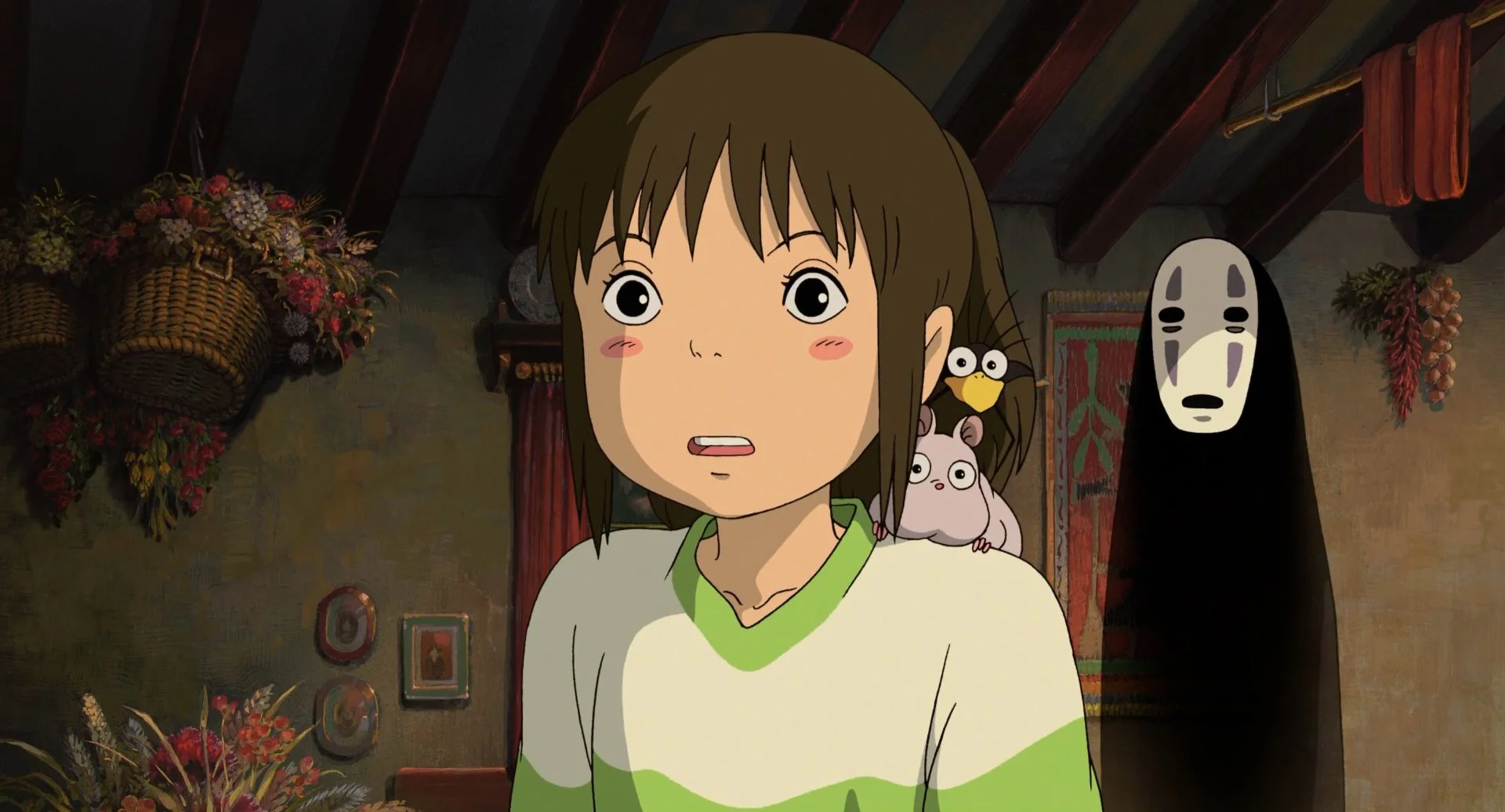
No-Face, known in Japanese as Kaonashi, is a mysterious spirit who initially appears quiet, lonely, and almost harmless.
But as he enters the bathhouse and begins interacting with its inhabitants, his behavior changes dramatically.
He discovers that the workers are fascinated by gold and begins producing it to gain their attention.
The more they indulge him, the more excessive his behavior becomes.
For our No-Face cocktail, we wanted to recreate both his appearance and the unusual mixture of personalities he seems to adopt.
We begin with sake, choosing a variety with fruity and floral characteristics.
Goldschläger adds cinnamon flavor and a connection to the gold No-Face uses to influence the bathhouse workers.
A small amount of limoncello introduces bright lemon notes, while Concord grape juice contributes fruit flavor and depth.
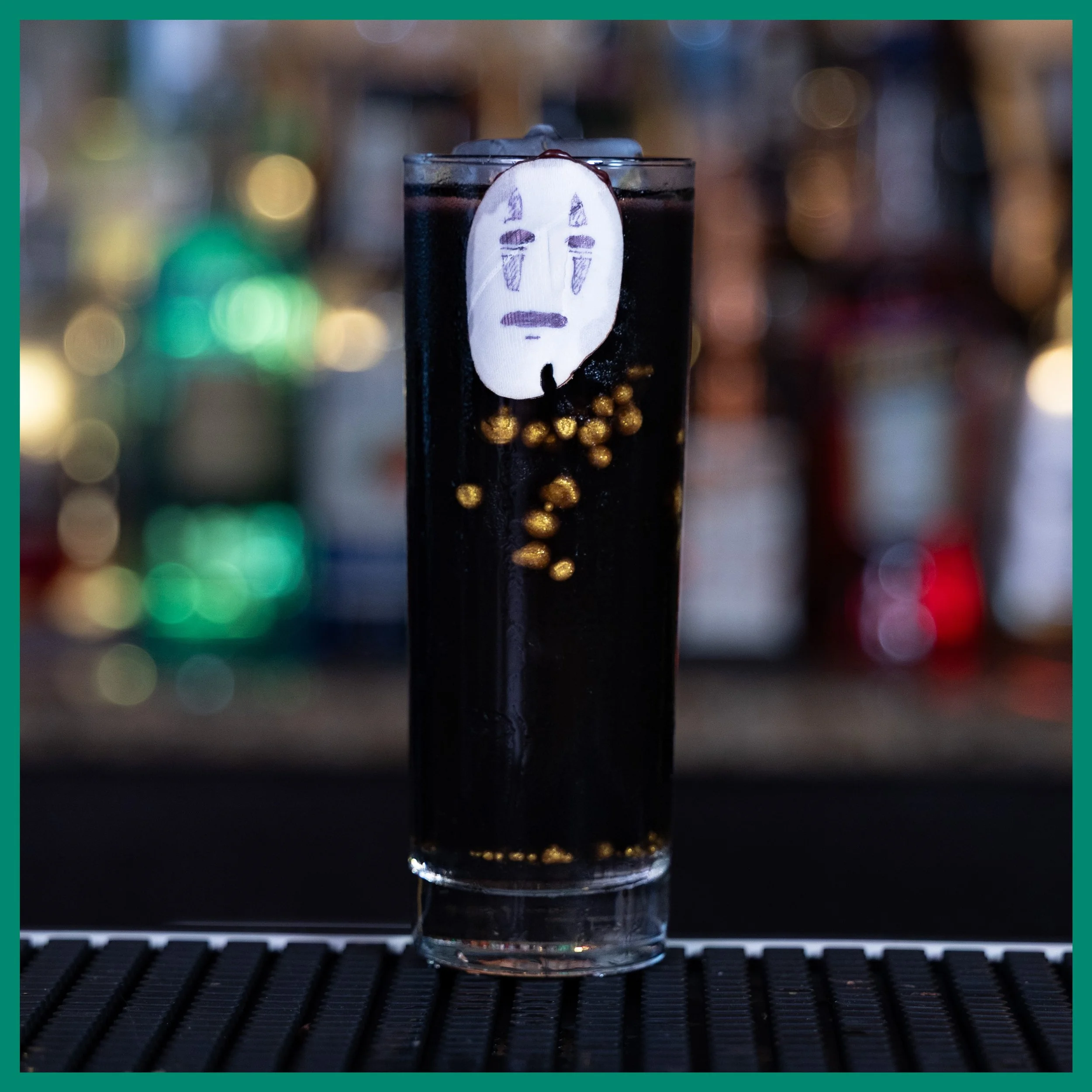
Activated charcoal creates the cocktail's dark appearance, and a small amount of vanilla syrup provides additional sweetness.
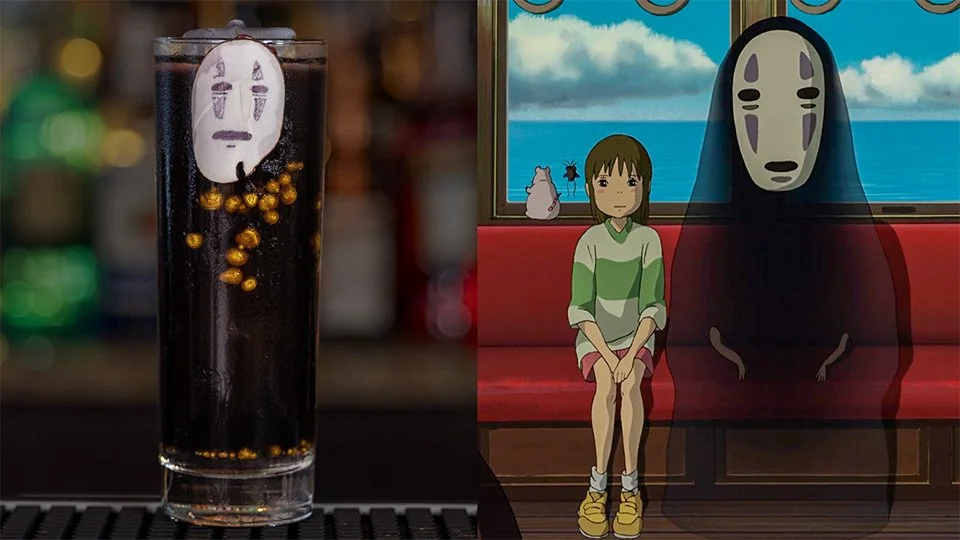
We finish the drink with golden pineapple cocktail pearls and a handmade garnish resembling No-Face's distinctive mask.
The result is dramatic, mysterious, and surprisingly flavorful.
Why Sake Was the Perfect Spirit for No-Face
We had been looking for an opportunity to create a sake-based cocktail, and No-Face provided an interesting starting point.
One of the things that fascinated us about sake was the enormous variety available.
During our episode, we joke about how much time it took to choose a bottle from the liquor store's extensive selection.
Different sakes can offer dramatically different aromas, textures, and flavor profiles.
Some are delicate and floral, while others are earthy, fruity, or richly savory.
That variety seemed particularly appropriate for No-Face, a character whose behavior and personality appear to change depending on his surroundings.
We selected a sake with a fruitier, more floral profile to complement the cocktail's other ingredients.
During our tasting, we're impressed by the combination of sake and Goldschläger.
The cinnamon provides warmth and depth, while the limoncello introduces a brighter citrus note.
We use only a small amount of limoncello because its flavor can quickly become dominant.
The Concord grape juice adds another dimension, creating a cocktail that's fruity, subtly spiced, and layered.
It's an unusual combination, but one that works surprisingly well.
And just like No-Face, the drink has more going on beneath its appearance than you might initially expect.
Gold, Greed, and the Meaning of No-Face
No-Face is one of the film's most fascinating characters because his behavior seems to reflect the people around him.
When he enters the bathhouse, he discovers that its workers are eager to receive gold.
He responds by producing more of it, attracting attention and encouraging increasingly excessive behavior.
For our cocktail, Goldschläger and the golden pineapple pearls serve as direct references to this part of the story.
But they also contribute flavor and texture.
Goldschläger introduces cinnamon, while the decorative pearls add a playful visual element.
The cocktail's dark appearance recalls No-Face's shadowy form, and the handmade mask garnish completes the presentation.
During our discussion, we explore how the character can be interpreted as a reflection of greed, loneliness, and the influence of his environment.
No-Face isn't simply a traditional movie villain.
His behavior changes depending on how others treat him and what they encourage him to become.
That complexity makes him one of the movie's most memorable figures.
And it gave us an opportunity to create a cocktail with a similarly layered personality.
Spirited Away: A Movie That Rewards Another Viewing
Although Spirited Away is one of the most celebrated animated films ever made, it wasn't a movie we were particularly familiar with before preparing this episode.
During our discussion, we talk about how frequently it appears on lists of the greatest films of the 21st century.
The movie also won the Academy Award for Best Animated Feature in 2003, helping introduce Studio Ghibli and Japanese animation to an even broader international audience.
But what surprised us most was how much there is to explore beneath the story's fantastical surface.
At first glance, Spirited Away is a coming-of-age adventure about a young girl trying to rescue her parents.
Yet the film also explores identity, courage, greed, environmental concerns, and the importance of remembering cultural traditions.
It's a movie filled with symbolism, and we quickly realized that one viewing might not be enough to appreciate everything Miyazaki included.
That complexity became part of what made creating cocktails for the film so enjoyable.
Every character, ingredient, and visual detail offered another opportunity to explore the story.
Hayao Miyazaki, Childhood, and the Cost of Consumerism
During our episode, we discuss how Miyazaki developed Spirited Away with young audiences in mind.
Rather than creating a conventional fairy-tale heroine, he wanted to tell a story about an ordinary girl who discovers her own strength through difficult experiences.
Chihiro begins the movie frightened, uncertain, and dependent on her parents.
But after entering the spirit world, she's forced to take responsibility for herself.
She learns to work, build relationships, and make difficult decisions.
Her transformation is gradual, which makes it especially satisfying.
We also discuss the film's commentary on consumerism and greed.
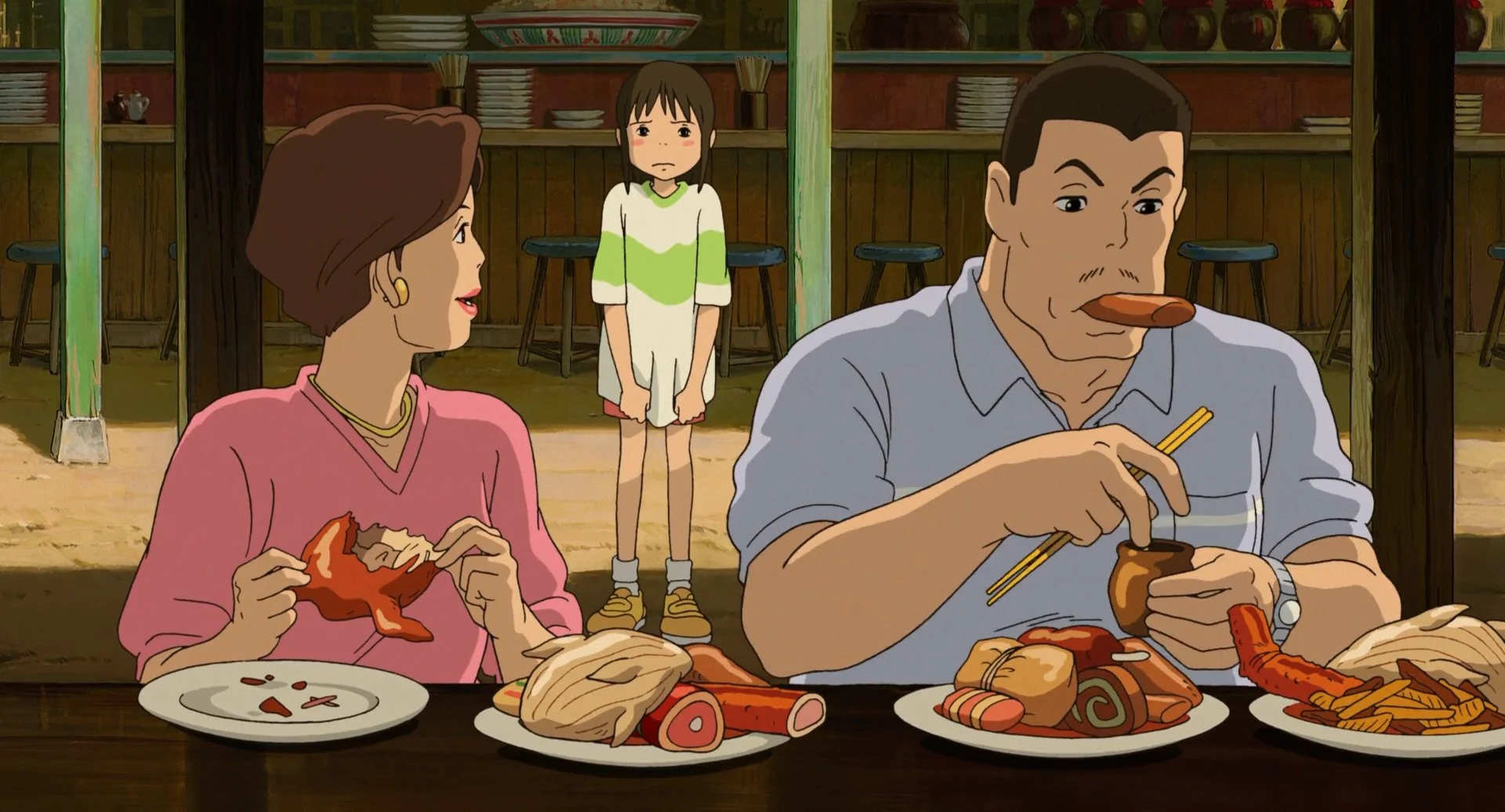
Chihiro's parents are transformed into pigs after helping themselves to food that doesn't belong to them.
The bathhouse workers become obsessed with No-Face's gold.
And throughout the story, characters must navigate the tension between material desires and more meaningful relationships.
These themes connect to Miyazaki's broader interest in Japanese traditions and the changing values of modern society.
The film's spirit world draws on Japanese folklore and cultural imagery, creating a setting that feels both fantastical and deeply rooted in tradition.
For us, exploring those elements made the movie particularly rewarding.
Two Cocktails for a Journey Into the Spirit World
Kamaji Tea and No-Face offer two very different experiences.
Kamaji Tea is warm, earthy, and comforting, combining Japanese whisky, matcha, ginger liqueur, and black sesame.
Its flavors and presentation celebrate Kamaji's steady presence and the soot sprites who help keep the bathhouse running.
No-Face is cooler, darker, and more mysterious, combining sake, cinnamon, lemon, grape, and vanilla in a cocktail inspired by the spirit's changing personality and fascination with gold.
One emphasizes balance and warmth.
The other explores complexity, contrast, and transformation.
Together, they reflect the extraordinary imagination that makes Spirited Away such a memorable film.
Whether you're searching for Spirited Away cocktails, Japanese whisky and matcha drinks, sake cocktail recipes, black sesame cocktails, or Studio Ghibli movie-night drinks, these two original creations offer a creative way to explore Miyazaki's magical world.
So settle in for a journey through the spirit world, enjoy a cocktail inspired by one of its unforgettable characters, and prepare to discover something new.
Just remember: if you find an unattended buffet in an abandoned amusement park, it's probably best to keep walking.
Spirited Away (2001). Directed by Hayao Miyazaki. Written by Hayao Miyazaki.
Starring Rumi Hiiragi, Miyu Irino, Mari Natsuki, Takashi Naito, Yasuko Sawaguchi, Tsunehiko Kamijo, Takehiko Ono, Bunta Sugawara.
A Studio Ghibli Production. Distributed by Toho. Music by Joe Hisaishi.
Kamaji Tea
In a heatproof cocktail glass, combine
1.5 oz Japanese Whiskey
1.5 oz Ginger Liqueur
stir to combine. In a matcha bowl, sift
1 bar spoon of Matcha
Heat water to 160F and pour into matcha bowl. Whisk using a quick back-and-forth motion until frothy and smooth. Pour into cocktail glass, stir to incorporate. Using a barspoon, gently sink
Black Sesame Mix
to the bottom of the glass. Cover up pour line with a
chocolate roasted newt.
No Face
In a mixing glass, combine
2 oz Sake
.5 oz Goldschlager
.25 oz Lemoncello
1 oz Concord Grape Juice
And .5 capsule or .25 tsp Activated Charcoal.
Add ice and stir until chilled. Pour .25 oz vanilla Simple syrup at the bottom of a chilled Collins glass. Strain cocktail into Collins glass with a spear. Garnish with Gold Pineapple Cocktail Caviar and a
Dried radish flattened and embellished as a no face mask.
Cocktails and Videos created by Boozy Movies
If you like these cocktails, you’ll love:
If you like this movie, you’ll love: